
Minnesota Credit Revival: Fix Your Score and Get Your Home Loan
You have the vision. You want a home in Minnesota. You can see yourself drinking coffee on your deck in Maple Grove, hosting family dinners in St. Paul, or enjoying the lake life in Minnetonka.
But then you think about it. The thing that makes your stomach sink. Your credit score.
You might be thinking, “My score is too low. A lender will never loan me money. I’m stuck renting forever.”
I need you to stop thinking that way.
Your credit score is not a permanent tattoo. It is a financial snapshot. It can be changed. And if a low score is the only thing standing between you and your "Golden Ticket" pre-approval, then we have a new huddle play for you: Credit Revival.
This is a deep-dive guide of actionable education, on exactly how to clean up your credit, raise your score, and prove to a lender that you've earned your Pre-Approval Letter paving the way to purchase your new Minnesota home.
What Is a Credit Score And Why it Matters!
When you buy a home, you are probably taking out a mortgage. A mortgage is just a fancy real estate term for a home loan. A lender is giving you a huge amount of money, and they want to be sure you will pay it back.
Your credit score is a number, usually between 300 and 850, that acts as your financial report card. It tells the lender: “This is how good this person is at managing money and paying people back on time.”
In the real estate world, your credit score is your reputation.
Why does it matter so much? Because a higher score gives you two massive advantages in Minnesota:
Approval Certainty: A higher score makes it much more likely a lender will say "YES" to your loan application. This is essential for getting your pre-approval letter,
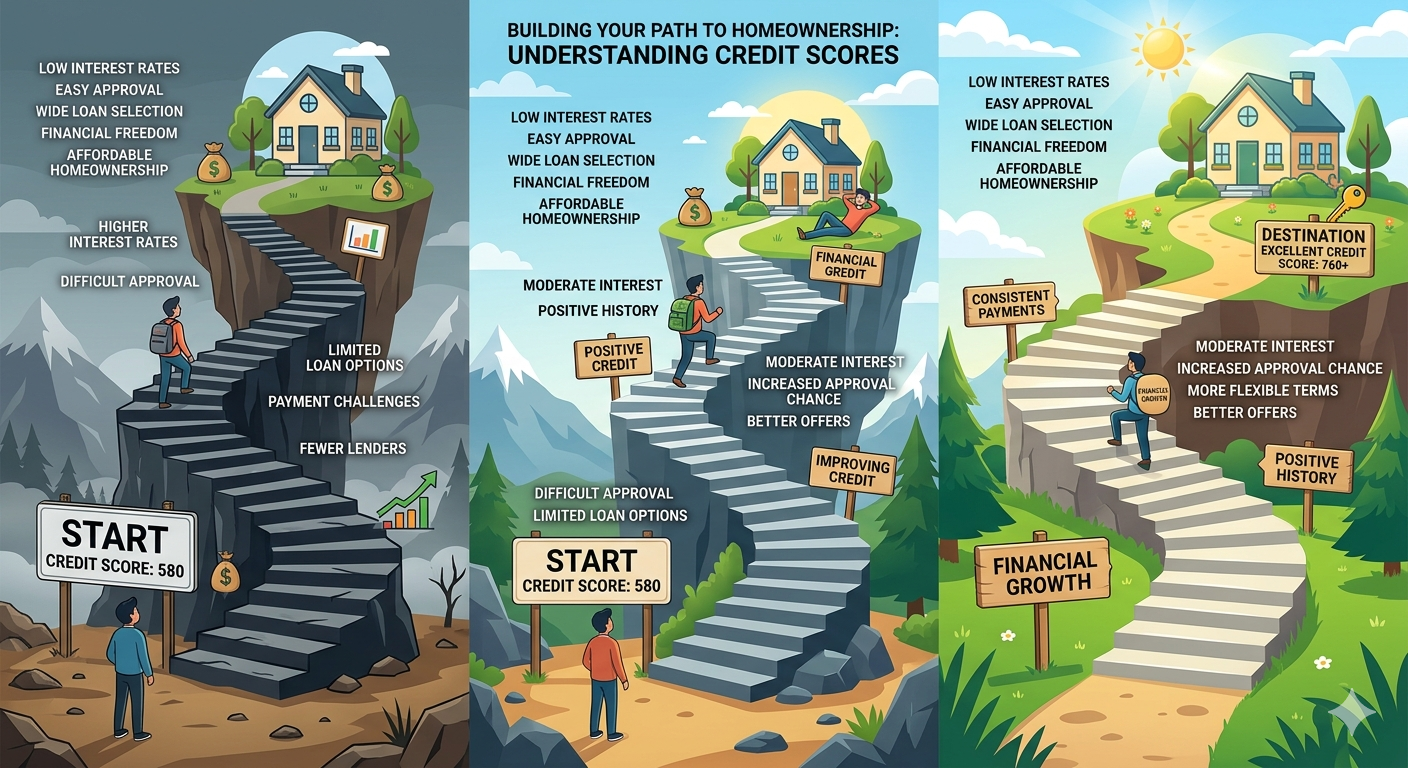
Lower Interest Rates: This is where you save REAL money. A lender rewards low-risk (high-score) buyers with lower interest rates. A difference of just 1% on your interest rate can save you tens of thousands of dollars over the life of your loan.
Step 1: Know Where You Stand. Get Your Credit Reports.
You cannot fight what you cannot see. Your Credit Revival starts with getting your actual credit reports.
You have three main credit reports, created by three major companies: Equifax, Experian, and TransUnion. These companies collect your financial information. Sometimes they have different information, and sometimes one might have an error that the others don't.
Your Action: By federal law, you are entitled to one FREE credit report from each of these three companies every single year. You can get them easily at the only official website: AnnualCreditReport.com. (Do not be fooled by other sites that ask for your credit card number.)
Do not just check your score on a free app. Download and print the full reports that list every single account and payment history.
Step 2: The Audit. Look for Errors and "Zombie" Debts.
Now, grab a highlighter and sit down in your kitchen. It’s time to audit your financial life. Read every single line of all three reports.
You are looking for mistakes. Credit report errors are incredibly common. According to the Federal Trade Commission (FTC), one in five people have an error on at least one of their credit reports.
Look specifically for:
Accounts that are not yours: This could be a sign of identity theft.
Debts listed as "unpaid" that you already paid off.
Incorrect payment history: For example, a "late" payment listed when you know you paid on time.
Duplicate debts: The same medical bill or old credit card listed two or three times.
Old debts that should be gone: Most negative information (like a late payment or a collection) must be removed from your report after 7 years. If you see a debt from 10 years ago, that is a "zombie" debt that may be tanking your score.
Highlight every single error you find. These are your easiest wins.
Step 3: Dispute Errors. Reclaim Your Score.
If you found an error, you have a right to have it fixed. This process is called a dispute.
You must dispute the error with BOTH the company that is reporting it (e.g., the credit card company) AND the credit bureau (Equifax, Experian, or TransUnion) that shows the error on its report.

Your Action: You can often file a dispute online through the credit bureau’s website. It is free. You will need to write a clear explanation of why the information is wrong and upload documents that prove it (like a cancelled check or a letter showing the account was closed).
Generally the credit bureau has 30 days to investigate. If they cannot prove the information is correct, they should remove it from your report. Getting an error removed can sometimes raise your score by 30, 50, or even 100 points!
Step 4: Master Your Payment History (The Biggest Score Factor)
Once the errors are gone, it is time to build your score back up. You need to understand how the score is calculated.
The most important factor in your credit score—accounting for about 35% of the total—is your payment history.
The lender wants to see that you pay your bills on time, every single time. A single late payment (more than 30 days late) can drop your score significantly.
Your Action:
Set Up Auto-Pay: For every single repeating bill you have (credit card, student loan, auto loan, utilities, etc.), set up an automatic minimum payment. You never want to forget a bill again. This is a crucial step in preparing for homeownership.
Get Current: If you are behind on any accounts, make it your number one financial priority to get them caught up and current.
Step 5: Squash Your Debt. Pay Down High Balances.
The next biggest factor—accounting for 30% of your score—is called Credit Utilization.
This is just a fancy term for: "How much of your available credit are you actually using?"
For example, if you have a credit card with a $10,000 limit, and you have a balance of $8,000, you are utilizing 80% of your credit. Lenders do not like to see a high credit utilization. They worry that you are financially stretched too thin.
Your Action: A great goal for a strong credit score is to keep your utilization under 30%, and under 10% is even better.
This does not mean you shouldn't use credit cards. It means you should avoid carrying a balance on them. Pay down your high balances. This doesn't just raise your score; it directly increases your buying power, which is how much money a lender will loan you.
Step 6: Deal with Collections (We Don't Judge)
Medical debt. Sudden job loss. A difficult divorce. These things happen to real people, including families across Central Minnesota. We understand, and we have absolute empathy. We don’t judge you for having an account that went to "collections" (where a separate company is hired to collect an old debt). We want to help you resolve it so it stops hurting your score.
Collections are a major negative "mark" on your credit. However, you can minimize the damage.
Your Action:
Do Not Pay Old Collections Blindly: Before you pay a dime, you can ask the collection agency to "validate the debt." They must send you written proof that the debt is yours, that the amount is correct, and that they have the legal right to collect it.
Step 7: Protect Your Revival. Do NOT Open New Credit.
You are doing the hard work. You are auditing, disputing, paying on time, and squashing debt. Do not make a rookie mistake that undoes all your progress.
Your Action: Do NOT, under any circumstances, apply for new credit, loans, or even a new utility account while you are preparing to buy a home.
Every time you apply for credit (e.g., "Save 10% today by opening a store card!"), the company does a "hard pull" on your credit history. This single check can temporarily drop your score by a few points. It also tells other lenders that you might be desperate for more money, which is a red flag.
Stay focused. Do not open new cards, do not buy a new car, and do not buy new furniture on a payment plan. Your only financial goal right now is your Credit Revival. Follow this guide and you are on your way to homeownership.